Selecting the Ideal Landscape Rake for Your Sustainable Farm
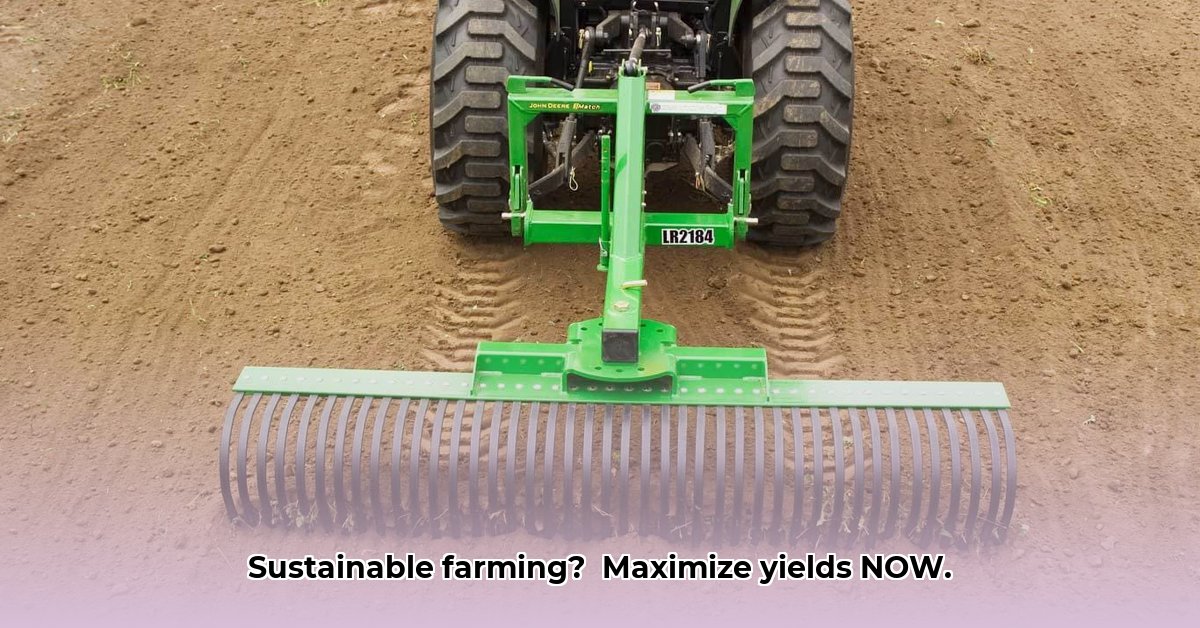
Choosing the right tractor-mounted landscape rake is crucial for efficient and sustainable farming. This guide helps you select, use, and maintain the best rake for your needs, boosting yields and minimizing environmental impact. We'll compare models, offer step-by-step instructions, and share real-world examples of successful implementation. For more specialized rakes, see pine straw rakes.
Types of Tractor-Mounted Landscape Rakes
Several rake types cater to different farming needs and soil conditions. Understanding these differences is key to making an informed decision.
Rake Width and Maneuverability
Rake width directly impacts efficiency. Wider rakes cover more ground quickly, ideal for large fields. However, maneuverability decreases in tight spaces. Smaller rakes offer greater precision in confined areas. Consider the size and layout of your fields when making your choice. Do you primarily work in large open fields or smaller, more enclosed areas? This will influence your decision.
Tine Design: Flexibility and Spacing
Tine (tooth) design significantly affects the rake's performance. Closely spaced, flexible tines excel at fine leveling and debris removal, ideal for seedbed preparation. Wider spacing handles larger debris and rocks more effectively, useful for clearing fields after harvest. The type of debris you commonly encounter should inform your choice.
Material Durability: Steel vs. Aluminum
Durable materials are essential given the demanding nature of land management. Steel rakes, known for their exceptional toughness, are perfect for rocky or challenging terrain. Aluminum rakes, while slightly less durable, are gentler on the soil, reducing compaction, a significant factor in promoting healthy root systems and overall plant health. The composition of your soil—rocky, sandy, or clay—will influence your decision.
Tractor Compatibility: Ensuring a Secure Fit
Ensuring compatibility with your tractor's three-point hitch system is paramount. Incorrect attachment can lead to operational issues and safety hazards. Always check your tractor's specifications and the rake's compatibility before purchasing.
Choosing the Right Rake: A Detailed Comparison
This section compares three popular models, highlighting their key features and suitability for different applications. Remember, specific models and features vary; this is a general comparison.
| Feature | Model A (Compact) | Model B (Mid-Size) | Model C (Heavy-Duty) |
|---|---|---|---|
| Width | 4 ft | 6 ft | 8 ft |
| Tine Type | Flexible | Semi-Rigid | Rigid |
| Tine Spacing | Close | Medium | Wide |
| Material | Heat-Treated Steel | Heat-Treated Steel | Heat-Treated Steel |
| Weight | 500 lbs | 800 lbs | 1200 lbs |
| Price (approx.) | $800 - $1200 | $1200 - $1800 | $1800 - $2500 |
Attaching and Operating Your Landscape Rake: A Step-by-Step Guide
Proper attachment and operation are crucial for safety and efficiency. Follow these steps:
- Engage the PTO: Ensure your tractor's PTO (Power Take-Off) is engaged before starting. This powers the rake's operation.
- Raise the Three-Point Hitch: Use your tractor's hydraulic controls to raise the three-point hitch arms to their highest position.
- Secure Attachment: Carefully align and connect the rake's hitch pins with your tractor's hitch points, ensuring a secure connection. Refer to your equipment manuals for specific instructions.
- Lower the Rake: Gradually lower the rake to the ground using the three-point hitch controls. Avoid sudden drops to prevent damage.
- Adjust Settings: Adjust the rake's angle and depth to optimize performance for your specific task and soil conditions.
- Maintain Safe Speed: Operate at a safe speed, adjusting as needed for terrain conditions. Avoid sudden movements or sharp turns.
- Safety Gear: Always wear appropriate safety gear, including eye protection and hearing protection.
Maintenance and Repair: Extending the Life of Your Rake
Regular maintenance is crucial for extending the rake's lifespan and ensuring optimal performance.
- Regular Inspections: Inspect the rake after each use for loose bolts, damaged tines, or bent components. Address any issues promptly.
- Lubrication: Lubricate all moving parts, particularly pivot points, according to the manufacturer's recommendations. This can significantly extend the life of your rake.
- Tine Replacement: Replace worn or broken tines without delay to maintain efficiency and prevent further damage.
- Storage: Store your rake in a dry, protected area to prevent corrosion and damage when not in use.
Real-World Success Stories: Farmers Sharing Their Experiences
Many farmers have reported significant benefits from using landscape rakes. One organic farmer reported a 40% reduction in land preparation time, allowing for earlier planting and improved yields. Another farmer successfully cleared a field of debris after a storm using their rake. These are just a few examples of the potential value of these essential tools.
Conclusion: Maximizing Yields and Sustainability
Investing in a well-chosen landscape rake greatly enhances sustainable farming. The increased efficiency, lower labor costs, and reduced soil compaction contribute to improved yields and a healthier environment. Remember to factor in not only the initial purchase cost but also the long-term benefits.
Resources
Further information on choosing and maintaining tractor-mounted landscape rakes can be found at [Insert Relevant Website Links Here]. Consult your local agricultural equipment supplier for expert advice and product demonstrations.